

Quick Answer
For Dubai, choose Persian rugs for heritage character in living spaces, epoxy flooring for garages, warehouses and showrooms that need heavy-duty seamless protection, and wall-to-wall carpet for bedrooms, offices and majlis areas where comfort and sound absorption matter most. The right pick depends on traffic, humidity, budget and maintenance time.
Key Facts Table
| Factor | Persian Rugs | Epoxy Flooring | Wall-to-Wall Carpet |
| Best for | Living rooms, majlis, entrances | Garages, workshops, showrooms | Bedrooms, offices, hotels |
| Typical lifespan | Decades with care | 5–15 years (varies by system) | 8–15 years (varies by grade) |
| Maintenance | Regular vacuuming, periodic professional wash | Damp mopping | Vacuuming, scheduled deep cleaning |
| Heat/humidity tolerance | Good (wool) | Excellent | Good with proper underlay |
| Relative cost | Medium to very high | Medium | Low to medium |
Introduction
Flooring in Dubai works harder than almost anywhere else. Summer heat regularly passes 40°C, air conditioning runs for months, fine desert dust gets everywhere, and homes often mix polished marble with very high foot traffic. Choosing between a hand-knotted rug, a seamless resin floor and fitted carpet is therefore less about fashion and more about how each material behaves in this climate.
This guide explains what each option is, where it performs best, and what to check before you buy. Whichever route you take, a showroom visit to Risala Furniture and Interiors LLC can help you see textures and finishes before you commit.
What Makes a Persian Rug Different?
Definition
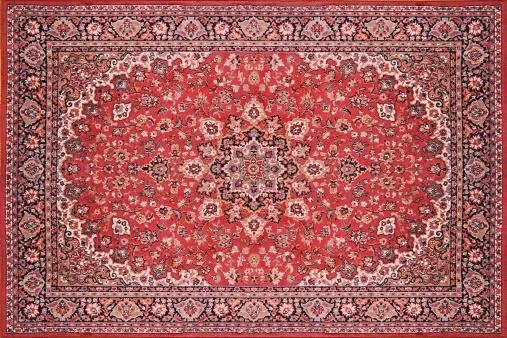
A Persian rug is a hand-knotted (or occasionally hand-tufted) textile traditionally woven in regions such as Isfahan, Tabriz, Kashan and Qum, using wool, silk or a blend on a cotton or wool foundation.
Why buyers in the UAE still choose them
If you are searching for persian rugs dubai, you are usually weighing authenticity, size and colour against your interior. Three points matter most:
- Knot density. Higher knots per square inch generally allow finer pattern detail, though density alone does not guarantee quality.
- Material. Wool resists crushing and handles heat well; silk is delicate and better for low-traffic spots.
- Dye and wash. Natural or well-fixed dyes resist fading under strong window light.
Practical example: A villa in Jumeirah with a marble-floored lounge often uses a 3 x 4 metre rug to define the seating zone. The rug softens echo, warms the visual tone and can be rotated yearly to even out sun exposure.
Epoxy Flooring: When Seamless Matters
Definition
Epoxy flooring is a resin coating system, applied in layers over prepared concrete, that cures into a hard, seamless surface.
Where it works in Dubai
Demand for epoxy flooring dubai comes mainly from garages, warehouses in Al Quoz and Jebel Ali, car showrooms, kitchens and light industrial units. Seamless surfaces do not trap dust, resist oil and tyre marks, and are easy to wash.
How installation works (step by step)
- Test the concrete for moisture and strength.
- Diamond-grind or shot-blast the slab to open the surface.
- Repair cracks and joints.
- Apply primer.
- Apply the epoxy body coat (colour, flakes or metallic effect).
- Seal with a topcoat, such as polyurethane, for UV and scratch resistance.
- Allow proper curing before heavy loads.
Commonly referenced test methods include ASTM D4060 (abrasion), ASTM D4541 (pull-off adhesion) and ASTM F2170 (in-slab relative humidity). Ask any contractor which tests they run before coating.
Caution: Standard epoxy can yellow under direct UV, so exterior-facing or sunlit areas usually need a UV-stable topcoat.
Wall-to-Wall Carpet: Comfort and Acoustics
Definition
Wall-to-wall carpet is broadloom or tile carpet fitted across an entire room edge to edge.
Why it still works in modern interiors
People searching wall to wall carpet dubai typically want warmth, noise reduction and a uniform look. In apartments with thin slabs, carpet cuts footfall and echo noticeably. Offices and hotels often choose carpet tiles because a damaged section can be replaced without relifting the whole floor.
What to check
- Pile type and density: Dense, low-to-medium pile suits busy areas.
- Fibre: Nylon resists wear; wool blends feel premium; polypropylene handles stains well.
- Classification: European standard EN 1307 classifies carpet by use class (domestic, commercial, heavy).
- Fire performance: Commercial projects should match the UAE Fire and Life Safety Code requirements enforced by Civil Defence.
- Underlay: A quality underlay extends life and improves comfort.
Interior specialists such as Risala Furniture and Interiors LLC can usually coordinate sampling and installation so the finished surface matches your furniture and lighting plan.
Comparison: Which Flooring Fits Which Space?
| Space | Recommended Choice | Reason |
| Villa living room | Persian rug over tile or marble | Character, zoning, easy to move |
| Home garage | Epoxy flooring | Oil and stain resistance, seamless |
| Master bedroom | Wall-to-wall carpet | Warmth, quiet, soft underfoot |
| Corporate office | Carpet tiles | Acoustics and easy replacement |
| Showroom | Epoxy (metallic or flake) | Impact and polished look |
| Majlis | Rug or fitted carpet | Cultural fit, comfort for seating |
Actionable Tips for Dubai Buyers
- Measure the room and tape out the rug size on the floor before ordering.
- Ask for physical samples and view them in your own lighting.
- Request a written scope for epoxy: surface prep method, coat count, thickness and curing time.
- Keep carpets away from direct, constant window sun, or use UV-filtering films or curtains.
- Vacuum rugs weekly; have rugs washed professionally every one to two years depending on traffic.
- Confirm warranty terms in writing and ask what they exclude.
- Bring room photos and dimensions to Risala Furniture and Interiors LLC so the team can suggest realistic options.
Frequently Asked Questions
1. Are Persian rugs suitable for Dubai’s climate? Yes. Wool rugs cope well with air-conditioned interiors, but avoid prolonged direct sunlight and high moisture.
2. How do I know a rug is hand-knotted? Flip it over: hand-knotted patterns appear clearly on the back with slight irregularities, while machine-made backs look uniform and often have a glued backing.
3. How long does epoxy flooring last? Depending on prep, system and traffic, many installations last 5–15 years. Garage floors with proper topcoats tend to sit at the longer end.
4. Is epoxy slippery? It can be when wet. Anti-slip aggregates can be added to the topcoat.
5. Can epoxy go over existing tiles? Sometimes, but the surface must be sound and properly abraded. Most contractors prefer coating bare concrete.
6. Is wall-to-wall carpet hygienic? With regular vacuuming and periodic hot-water extraction, yes. Those with severe dust allergies may prefer rugs that can be removed and cleaned.
7. Which is cheaper: carpet or epoxy? Entry-level carpet is often cheaper per square metre, while epoxy cost rises with prep work and decorative finishes.
8. How long does installation take? Carpet is usually installed in a day or two for an average room. Epoxy takes several days because of curing between coats.
9. Can I combine a rug with carpet? Yes, layering a smaller rug over low-pile broadloom is common in luxury bedrooms.
Key Takeaways
- Persian rugs deliver character and longevity; check knot quality and dye stability.
- Epoxy is a performance floor; surface preparation decides its lifespan.
- Wall-to-wall carpet gives comfort and sound control; match the grade to traffic.
- Use samples and written specifications to avoid surprises.
Conclusion
No single floor wins everywhere. Start with the room’s purpose, then weigh traffic, sun exposure and upkeep. A rug can transform a lounge, epoxy can protect a workspace, and carpet can quieten a bedroom. For help comparing materials in person, visit Risala Furniture and Interiors LLC and view samples under real lighting.
Visit us here: https://maps.app.goo.gl/igmNHkW1QCyL19wT7?g_st=ac