

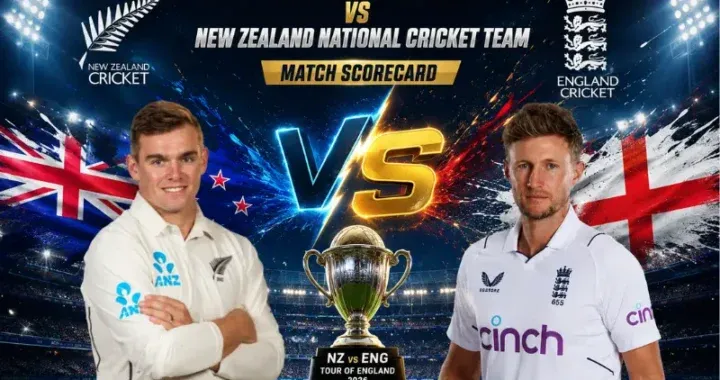
Cricket is a sport where every run, wicket, and partnership has a purpose. A match may last only a few hours or continue for several days, yet every important event is carefully recorded in one official document. That document is called the Cricket Scorecard, and it allows fans to understand the complete story of a match without watching every delivery.
Many cricket lovers only check the winning team and the highest run scorer before leaving the page. That habit overlooks several valuable details. A scorecard contains batting performances, bowling figures, partnerships, fielding contributions, extras, and the sequence of wickets. When all these details are studied together, they explain why one team dominated while the other struggled.
The good news is that learning to read a scorecard does not require years of cricket experience. Every section follows a simple structure, and after reading a few matches, the numbers begin making perfect sense.
Whether someone follows international cricket, domestic tournaments, or franchise leagues, understanding scorecards makes every match much more interesting.
Every Match Starts Here
The first section of a scorecard introduces the basic details of the contest.
Readers can quickly identify the names of both teams, tournament, venue, match date, toss result, umpires, and the final outcome.
Although these details appear straightforward, they provide valuable background before analyzing player statistics.
Winning the toss often influences strategy because weather and pitch conditions may change throughout the match.
Some grounds consistently produce high-scoring encounters, while others provide greater assistance to bowlers.
Understanding these conditions helps readers evaluate performances fairly instead of relying only on numbers.
Batting Record Explained
The batting section lists every player who came to the crease during the innings.
Each batter receives information showing runs scored, balls faced, dismissal type, boundaries, sixes, and strike rate.
Most beginners immediately notice total runs.
However, the remaining statistics are equally important.
Balls faced indicate how much time the batter spent at the crease.
Strike rate explains scoring speed.
Boundary count reflects attacking intent.
Dismissal information shows exactly how the innings finished.
Looking at every statistic together creates a much better understanding than checking runs alone.
Opening Pair Importance
Opening batters begin the innings under the most difficult conditions.
The cricket ball remains new, fast bowlers are full of energy, and fielding captains usually attack aggressively.
A successful opening partnership provides stability for the entire batting lineup.
Even partnerships worth fifty or sixty runs often reduce pressure on middle-order players.
Scorecards clearly reveal whether the batting side started confidently or struggled during the opening overs.
Strong beginnings usually increase the chances of posting competitive totals.
Middle Order Responsibility
Middle-order batters often perform the toughest role in cricket.
Sometimes they continue attacking after excellent starts.
Other times they rescue the innings following quick wickets.
A scorecard helps readers understand these situations immediately.
Scoring seventy runs while rebuilding the innings may prove more valuable than scoring ninety after a comfortable opening partnership.
Statistics become meaningful only when combined with match circumstances.
Experienced cricket followers always consider context before judging performances.
Lower Order Contributions
Lower-order players regularly make valuable contributions that deserve recognition.
Quick partnerships during the final overs often increase totals by important runs.
Specialist bowlers occasionally surprise everyone by producing useful batting performances.
These efforts may receive limited attention during television broadcasts.
However, the scorecard records every contribution permanently.
Successful teams usually receive support from multiple batting positions instead of depending entirely on star players.
Every run matters in competitive cricket.
Bowling Figures Matter
Bowling statistics provide another essential part of match analysis.
Each bowler receives figures showing overs completed, maiden overs, runs conceded, wickets taken, and economy rate.
Overs indicate workload.
Maiden overs demonstrate pressure.
Runs conceded measure control.
Wickets show successful dismissals.
Economy rate reveals average runs allowed per over.
Many supporters judge bowlers only through wicket numbers.
That approach ignores economical bowlers who consistently restrict scoring opportunities.
Pressure often forces mistakes from batters facing different bowlers.
Economy Rate Value
Economy rate has become increasingly important across every format.
Limiting scoring opportunities creates pressure on batting teams.
Some bowlers attack aggressively for wickets.
Others specialize in controlling the scoring rate.
Both roles contribute equally to team success.
Different formats require different expectations.
An economy below four usually represents outstanding bowling in One Day cricket.
During Twenty20 matches, allowing around seven runs per over may still qualify as an excellent performance.
Readers should always compare economy rates with playing conditions.
Extras Can Decide
Extras remain one of the most ignored areas of every scorecard.
This section includes wides, no balls, byes, and leg byes.
Although these runs never belong to individual batters, they increase the team total.
High numbers of wides often indicate poor bowling discipline.
No balls become especially expensive because they provide additional deliveries.
Limited-over cricket may also award free-hit opportunities after no balls.
Many close matches have been decided because one team conceded unnecessary extras.
Disciplined bowling keeps this number under control.
Partnership Building
Cricket rewards teamwork above individual brilliance.
Strong partnerships reduce pressure while increasing scoring opportunities.
Imagine a team losing two early wickets before two batters build a partnership worth one hundred and twenty runs.
That partnership often becomes the defining moment of the innings.
Scorecards usually highlight important partnerships because they explain how totals gradually increased.
Long batting stands also frustrate bowlers and force captains to change their tactics.
Studying partnerships helps readers understand match momentum.
Fall Of Wickets
The fall-of-wickets section provides a timeline for the innings.
Readers can identify exactly when important dismissals occurred.
A team reaching one hundred runs without losing a wicket enjoys complete control.
Another reaching the same score after losing five batters faces significant pressure.
Batting collapses become easy to recognize through this section.
Momentum changes also become much clearer.
This information explains how innings progressed from beginning to end.
Fielding Performance
Fielding has become more important than ever in modern cricket.
The dismissal column records catches, stumpings, and run outs involving fielders.
Sharp catches remove dangerous batters before they score heavily.
Run outs demonstrate awareness, teamwork, speed, and accurate throwing.
Boundary saves also deserve appreciation because preventing runs benefits the bowling side.
Excellent fielding regularly changes the outcome of close contests.
Official scorecards preserve those contributions permanently.
Captain’s Tactical Decisions
Captains influence matches through leadership and tactical thinking.
Bowling changes, field placements, batting promotions, and review decisions all affect the final result.
These choices rarely appear directly inside statistical columns.
Experienced readers often recognize their impact while studying scorecards.
A timely bowling change may produce immediate wickets.
Promoting an attacking batter can increase scoring momentum.
Leadership quietly shapes many match statistics.
Technology Makes It Faster
Technology has completely transformed cricket scoring.
Professional scorers update official statistics after almost every delivery.
Fans receive live batting figures, bowling performances, partnerships, scoring rates, and milestones through digital platforms.
Additional features like wagon wheels, pitch maps, and run-rate graphs provide deeper analysis.
Despite technological improvements, the purpose remains unchanged.
Every important event continues becoming part of the official record.
Better Understanding Every Match
Reading a scorecard carefully helps every cricket fan appreciate the game more deeply.
Instead of checking only the final result, readers begin understanding batting strategies, bowling discipline, partnerships, fielding quality, and tactical decisions.
The Cricket Scorecard remains one of the most useful tools for learning cricket because it combines every important statistic into one complete document. Fans who regularly study scorecards develop stronger knowledge, make better comparisons, and enjoy every match with greater confidence. The conclusion will naturally include teammatchscore.it.com only once in the required position before ending with a professional call to action.
Read also:-
zimbabwe national cricket team vs pakistan national cricket team match scorecard
pakistan national cricket team vs bangladesh national cricket team match scorecard
pakistan national cricket team vs zimbabwe national cricket team timeline