

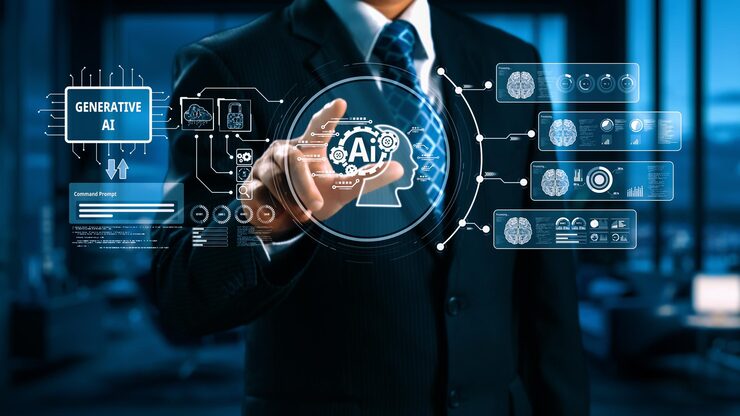
Business AI Integration is rapidly transforming the way companies operate, offering smarter, faster, and more efficient solutions for daily tasks. From automating repetitive workflows to enhancing customer interactions, AI technologies are helping businesses stay competitive in an increasingly digital world. Small startups and multinational corporations alike are discovering how AI integration can streamline operations, reduce costs, and improve overall productivity.
Consider a mid-sized e-commerce company struggling with inventory management and customer support. By adopting AI-driven solutions, they automated stock monitoring, predictive ordering, and chatbot-based support. Within months, operational efficiency improved, human errors decreased, and customer satisfaction surged. This example illustrates the tangible benefits of integrating AI into daily business processes.
How Business AI Integration Enhances Operational Efficiency
AI integration allows businesses to automate routine and time-consuming tasks, freeing employees to focus on strategic initiatives. Tasks like data entry, scheduling, and report generation can be handled by intelligent systems with higher accuracy and speed.
For instance, AI-powered analytics can quickly sift through vast amounts of sales data to identify trends and anomalies, enabling managers to make informed decisions without wading through spreadsheets. Similarly, AI algorithms in finance departments can flag potential discrepancies in real time, reducing the risk of errors and fraud.
Improving Customer Experiences with AI
Another critical aspect of Business AI Integration is enhancing customer experiences. AI-driven chatbots, recommendation engines, and personalization tools allow companies to engage customers more effectively. Personalized recommendations, tailored marketing campaigns, and instant support improve engagement and foster long-term loyalty.
A real-world example comes from a global travel agency that implemented an AI-based booking assistant. The assistant provides instant responses, suggests personalized travel packages, and even predicts peak travel times. Customers experienced faster service and tailored experiences, while employees focused on complex queries that required human intervention.
AI-Powered Decision Making
One of the most compelling benefits of AI integration is its ability to support strategic decision-making. Machine learning algorithms can analyze historical data, market trends, and customer behaviors to forecast outcomes and recommend optimal strategies.
For example, retail businesses can use AI to predict demand patterns, manage stock levels efficiently, and plan promotions that align with consumer behavior. This predictive capability not only improves operational efficiency but also enhances profitability and reduces waste.
Streamlining Supply Chain Management
Business AI Integration has revolutionized supply chain management, making it more transparent, responsive, and adaptive. AI algorithms can monitor supplier performance, forecast demand fluctuations, and optimize logistics routes.
A logistics company using AI-driven route optimization saw delivery times decrease while fuel consumption dropped significantly. Real-time tracking, predictive maintenance of vehicles, and automated scheduling allowed the company to maintain high service quality while reducing operational costs.
Enhancing Marketing and Sales Performance
AI also plays a pivotal role in marketing and sales. Customer segmentation, sentiment analysis, and predictive lead scoring allow sales teams to focus on high-potential prospects. Marketing campaigns powered by AI can dynamically adjust based on user interactions, maximizing engagement and return on investment.
For instance, a SaaS company integrated AI into its marketing automation platform. The system analyzed user behavior to personalize emails, recommend relevant content, and predict churn risk. As a result, customer retention improved and conversion rates increased substantially.
Employee Productivity and Collaboration
Beyond operational efficiency, AI integration improves employee productivity and collaboration. Tools like AI-driven project management, smart scheduling assistants, and collaborative virtual workspaces allow teams to work smarter.
In a software development company, AI-powered project tracking highlighted bottlenecks in real time, enabling managers to allocate resources efficiently. Teams collaborated seamlessly, deadlines were met more consistently, and overall output quality improved.
Overcoming Challenges in AI Integration
While the benefits are clear, successful Business AI Integration requires careful planning. Companies must address challenges like data quality, employee training, and change management. Clear objectives, stakeholder buy-in, and phased implementation ensure AI adoption aligns with business goals.
Small businesses, in particular, should start with scalable AI solutions that address the most critical pain points. Pilot programs allow companies to test effectiveness, gather feedback, and refine workflows before full deployment.
Future Trends in AI-Powered Businesses
The future of AI in business is expansive. Emerging technologies such as natural language processing, computer vision, and advanced predictive analytics promise to further streamline operations. AI will continue to enhance customer personalization, optimize supply chains, and enable smarter, faster decision-making.
Companies investing in AI now are positioning themselves for sustained growth. By leveraging Business AI Integration, they gain a competitive edge, improve operational efficiency, and create better experiences for both employees and customers.
Real-Life Success Stories
Several companies demonstrate how AI integration transforms operations. A multinational retail chain implemented AI for inventory management and personalized marketing, leading to a 20% reduction in stockouts and a 15% increase in sales. A healthcare provider leveraged AI for appointment scheduling and patient monitoring, enhancing patient satisfaction while reducing administrative workload.
These examples underscore the transformative potential of AI when strategically integrated into business processes, proving that AI is no longer a futuristic concept but a practical tool for day-to-day efficiency.
Read also:
greblovz2004
greblovz2004 gaming apk
which greblovz2004 should i start with
games of berkeley
betterthisworld com
betterthistechs news
betterthistechs articles by betterthisworld